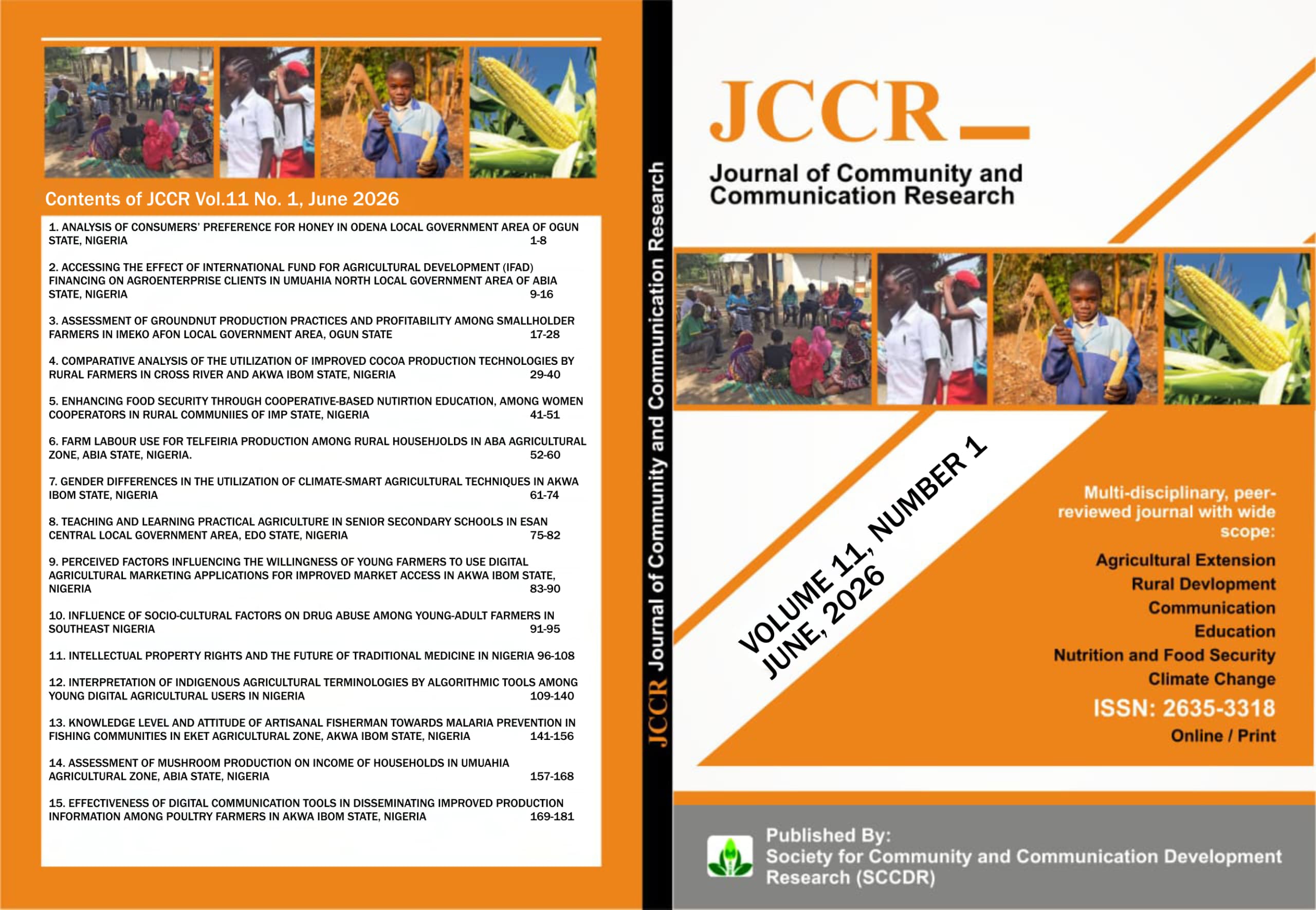
GENDER DIFFERENCES IN THE UTILIZATION OF CLIMATE-SMART AGRICULTURAL TECHNIQUES IN AKWA IBOM STATE, NIGERIA
Article Sidebar
Main Article Content
Abstract
This study examined gender differences in the utilization and constraints of climate-smart agricultural (CSA) techniques among rural farmers. Specifically, it described the socio-economic characteristics of male and female farmers, assessed their CSA utilization levels, and identified major constraints to adoption. A total of 480 farmers (240 males, 240 females) were selected using a multistage sampling technique across four agricultural zones. Data were collected via a structured questionnaire and analyzed using descriptive statistics and Principal Component Analysis (PCA). Findings revealed that the majority of respondents were aged 31–45 years, had secondary education (43.8%), and cultivated farms averaging 2.8 ha, with males generally older, more experienced, and earning higher incomes than females. Overall utilization of CSA techniques was moderate (mean = 42.6 ± 9.8), with males adopting practices slightly more frequently (44.2 ± 9.2) than females (41.0 ± 10.1); 51.7% of farmers fell in the moderate utilization category. Adoption was highest for improved crop varieties, biosecurity in poultry, and manure management in livestock, while aquaculture practices were least utilized. PCA revealed five major constraints: financial (21.2%), institutional (19.0%), technical/knowledge (16.8%), environmental (13.7%), and socio-cultural (12.1%), with financial and technical limitations most pronounced for female farmers. The study concluded that gender disparities affect CSA utilization, with women facing greater barriers to utilization. It recommended targeted capacity-building, inclusive extension campaigns, and provision of accessible credit and technical support to enhance equitable participation in climate-smart agriculture.
Keywords: Climate-Smart Agriculture, Gender Differences, Utilization, Constraints
Article Details
The copyright in this website and the material on this website (including without limitation the text, computer code, artwork, photographs, images, music, audio material, video material and audio-visual material on this website) is owned by the Journal of Community and Communication Research (JCCR) and its licensors. Please visit our Copyright Notice page for more details on copyright license, permissions, enforcement of copyright and infringing materials.